
















Home / The Ten Commandments
Exodus 20 · Deuteronomy 5 · c. 1250 BCE
The Ten Commandments
The full list, the traditional wording, and what each one asks of you now. Ten lines written on stone roughly three thousand years ago that still describe, with uncomfortable accuracy, how to live without wrecking yourself or anyone else.
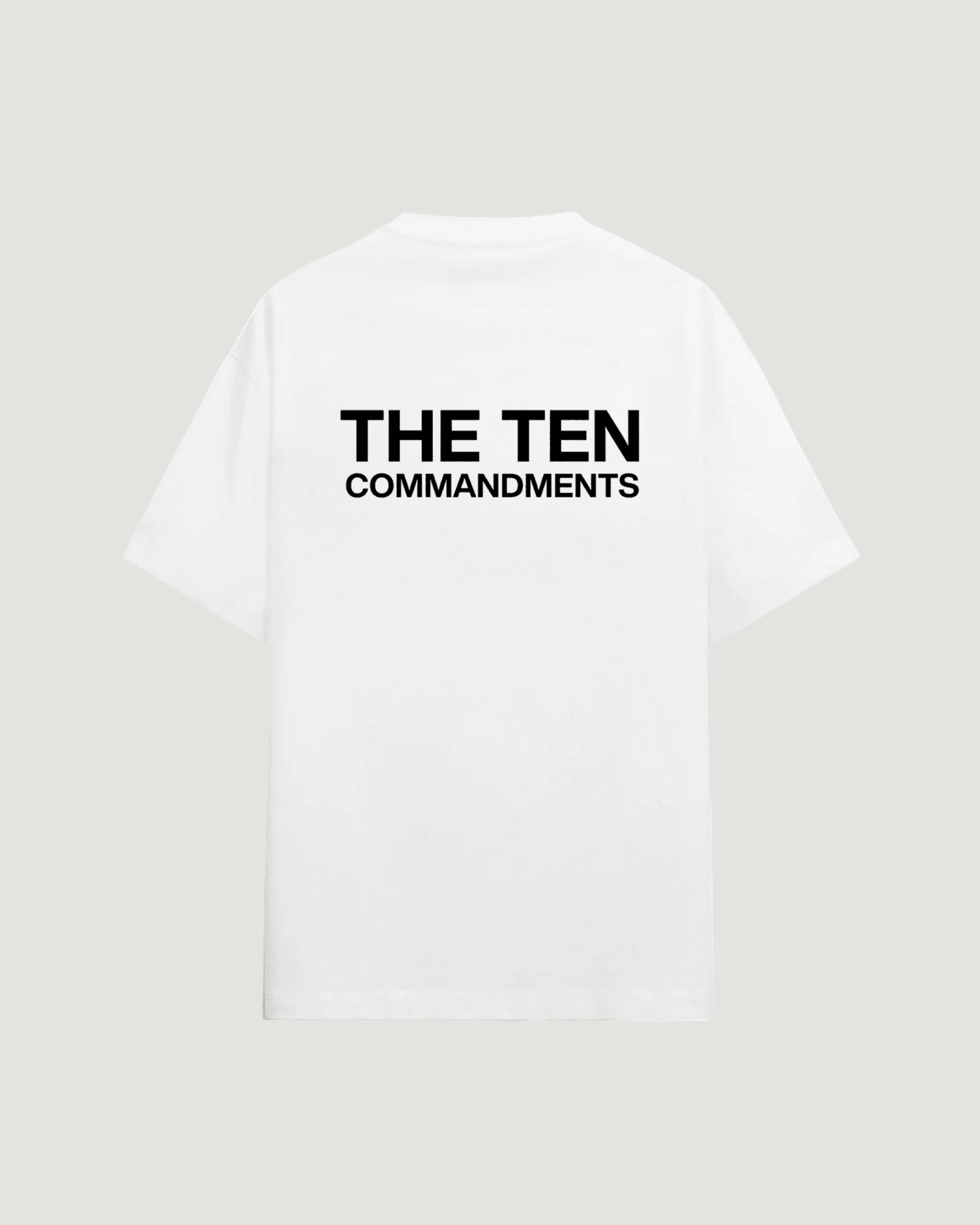
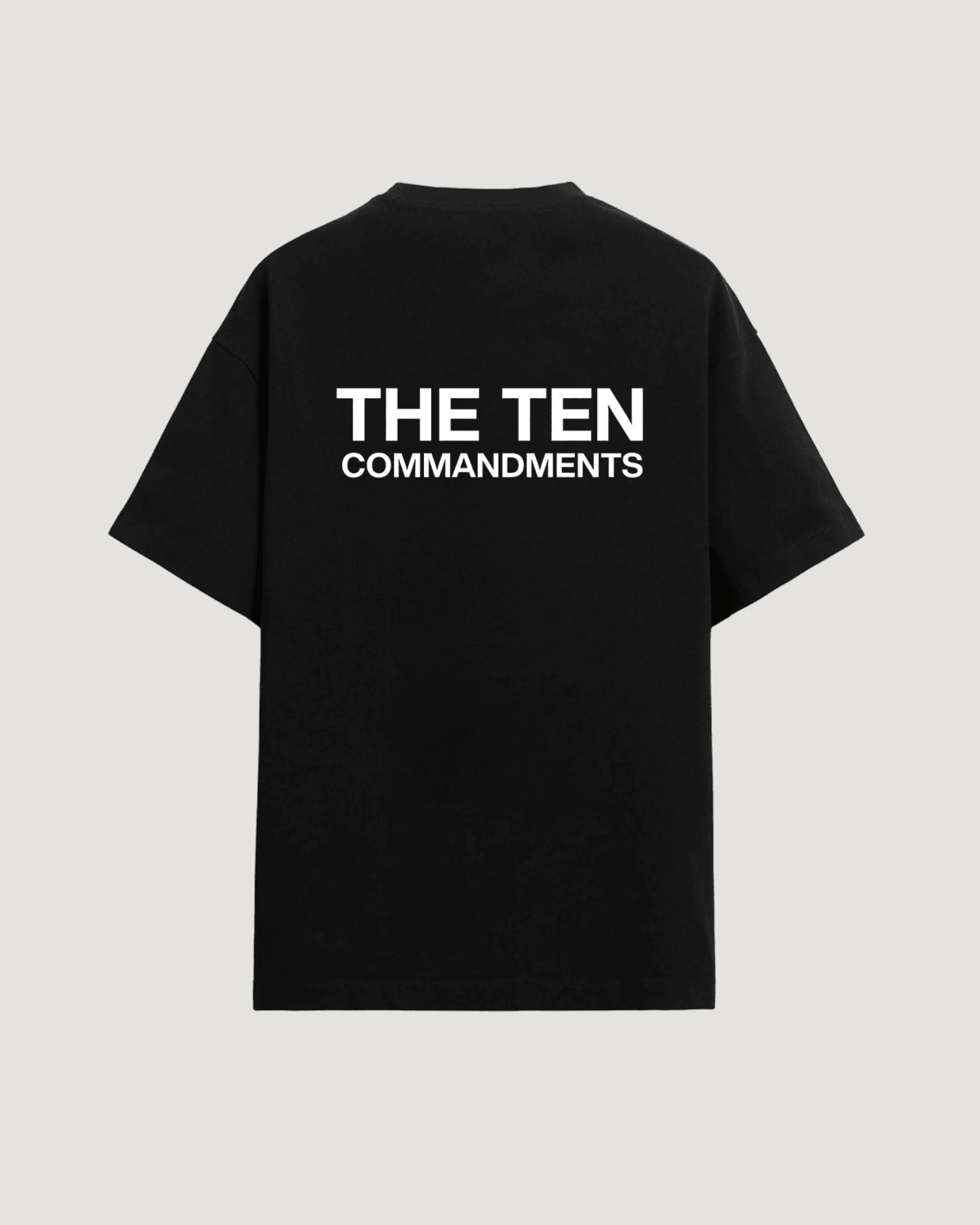
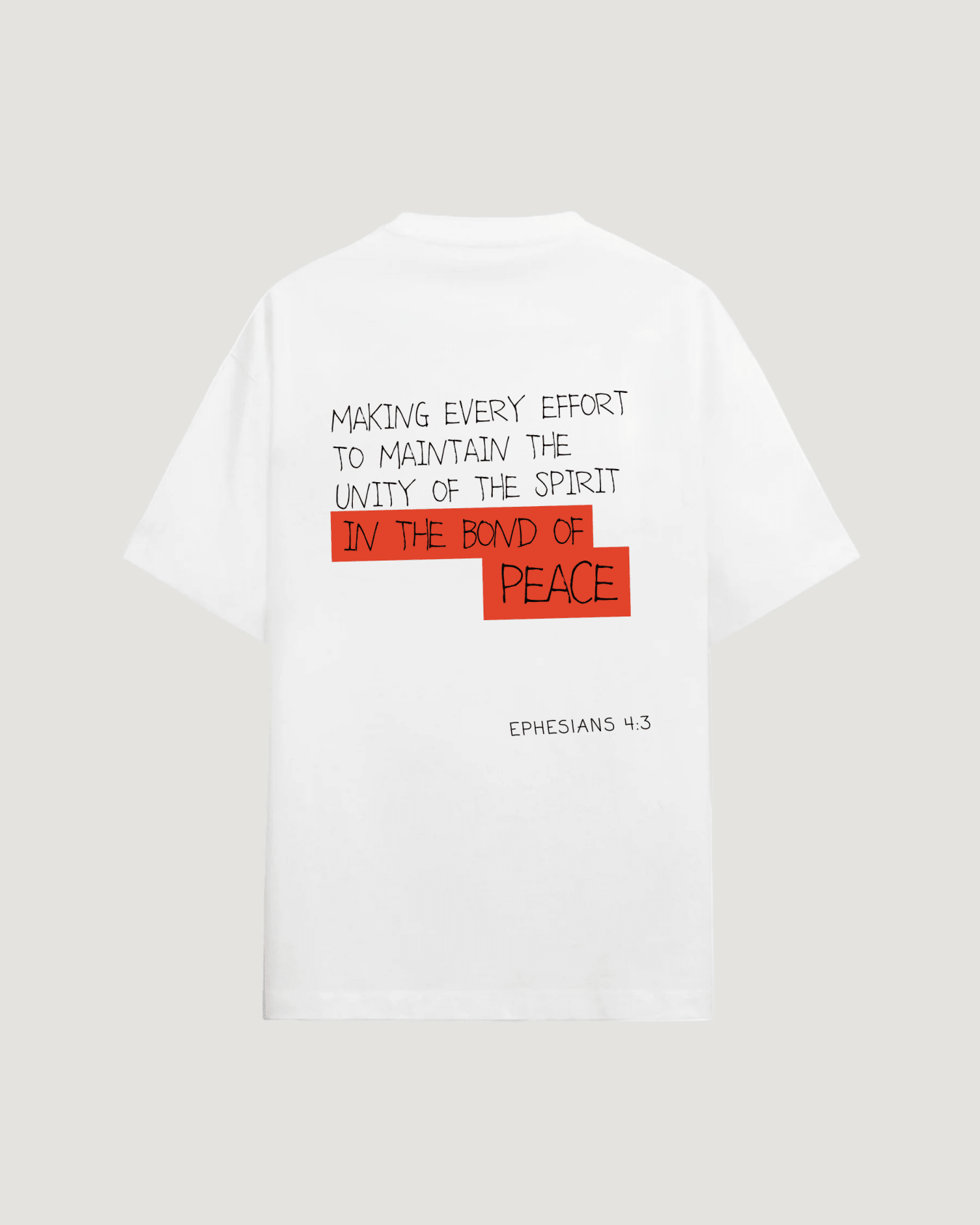
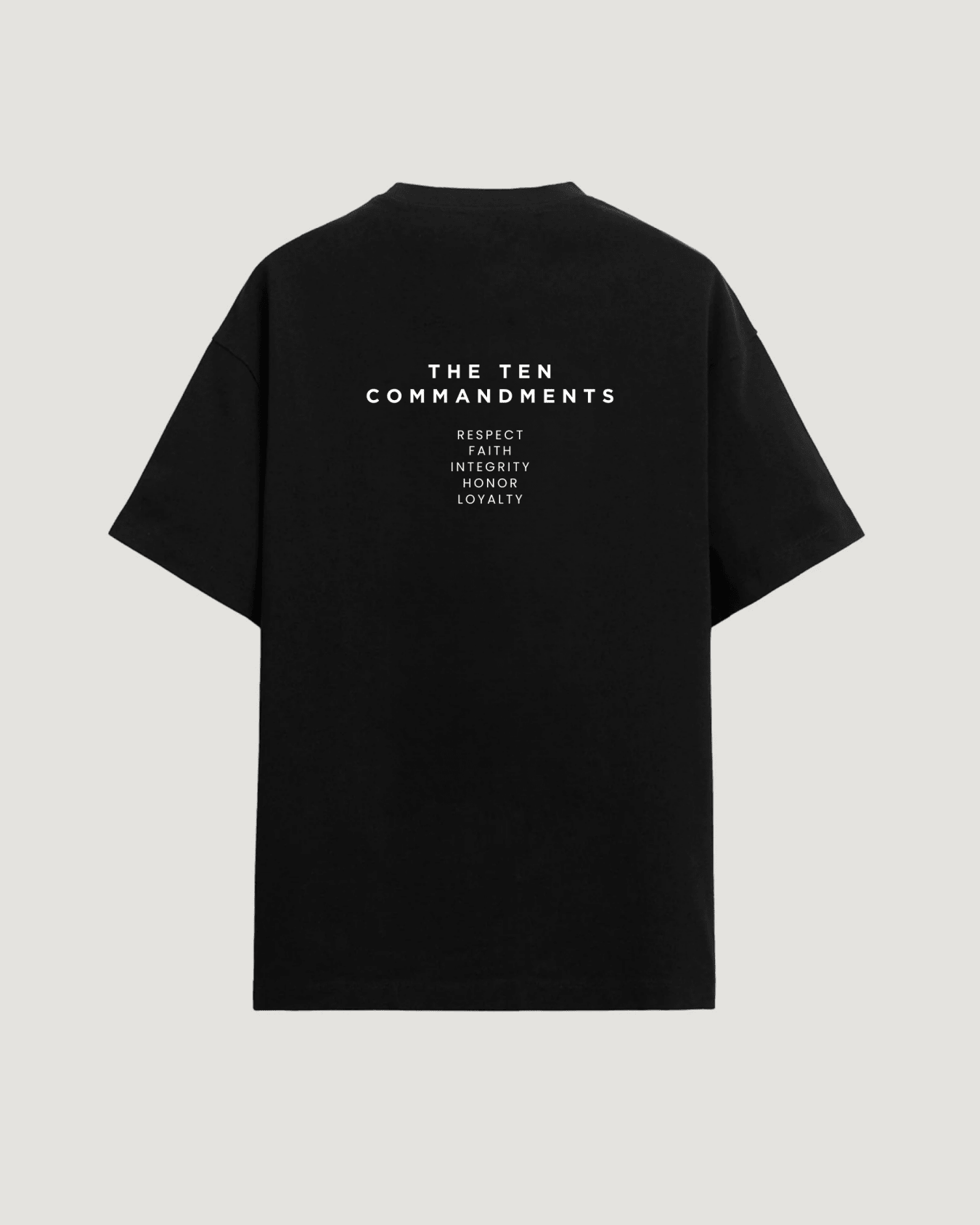
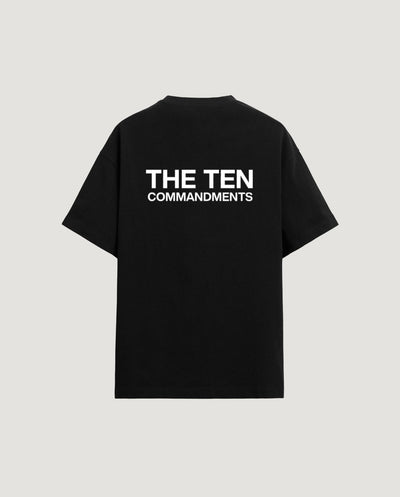
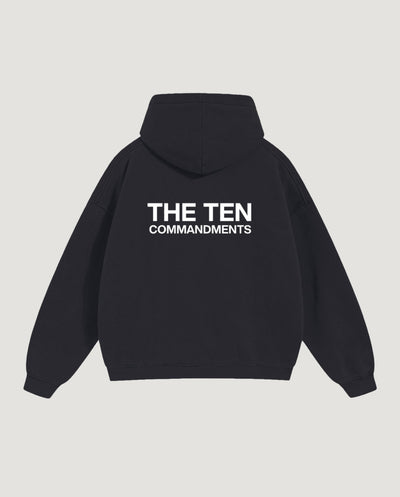
They were never only religious law. They are a code: ten limits that make freedom workable. We built Commandments around that idea, which is why every piece in The Ten collection carries one of them.
The list, in short
- You shall have no other gods before Me.
- You shall not make for yourself a carved image.
- You shall not take the name of the Lord your God in vain.
- Remember the Sabbath day, to keep it holy.
- Honor your father and your mother.
- You shall not murder.
- You shall not commit adultery.
- You shall not steal.
- You shall not bear false witness against your neighbor.
- You shall not covet.
What each one means today
You shall have no other gods before Me
No false idols
One God. One path. No shortcuts, no substitutes. The first commandment is really a question about attention: whatever you organise your life around is what you worship, whether you call it that or not. Money, status and image all make convincing gods until the moment you need one.
You shall not make for yourself a carved image
Stand for something
Everything you do is a statement. Make it count. The warning against graven images is a warning against the flattened version of a thing standing in for the thing itself. A curated feed is not a life. A logo is not a set of values.
You shall not take the name of the Lord your God in vain
Words have weight
Speak with intention. Carry your values with honesty. This is about more than swearing. It is about invoking something sacred to decorate a position you have not actually taken, and about promises made cheaply because nobody expects them to be kept.
Remember the Sabbath day, to keep it holy
Rest is sacred
Slow down. Presence is the rarest luxury. The Sabbath was a radical labour law before it was anything else: one day a week where no one, including the people who worked for you, could be made to produce. Rest is not what you earn after the work. It is part of the design.
Honor your father and your mother
Know your roots
Where you come from shapes everything you become. Honour is not the same as agreement. It is the refusal to pretend you arrived by yourself, and the willingness to carry forward what was good in what you were given.
You shall not murder
Protect what matters
Guard your energy, your faith, your people. The sixth commandment sets the floor of every moral system that followed it: another person's life is not yours to spend. Everything downstream of that, from how you argue to how you treat someone who cannot help you, is the same principle in smaller print.
You shall not commit adultery
Stay true
Loyalty to your values is non-negotiable. Faithfulness is a habit before it is a vow. People rarely break their word in one dramatic moment; they break it in a hundred small ones where nobody was watching and it did not seem to count.
You shall not steal
Earn everything
Build your own. Copy nobody. Create something real. Theft is not only property. It is credit taken for work you did not do, time taken from people who cannot refuse you, and ideas lifted because the original maker had no way to stop you.
You shall not bear false witness against your neighbor
Be authentic
Authenticity is the only currency that does not devalue. The ninth commandment protects something fragile: a shared account of what is true. Every lie told about someone else costs them something they cannot get back, and costs everyone the ability to trust the record.
You shall not covet
Own your lane
Stop comparing. Your path is yours alone. The last commandment is the only one that governs a thought rather than an act, and it is the one the modern world breaks hardest. Coveting is the engine of most unhappiness, and almost every screen you own is built to start it.
Why the numbering differs between traditions
The text in Exodus 20 is continuous. It does not number itself, so different traditions divide the same words in different places. All of them arrive at ten.
| Tradition | Counts first | Counts last |
|---|---|---|
| Jewish (Talmudic) | “I am the Lord your God, who brought you out of Egypt” is the first commandment. | Other gods and carved images are joined into one; coveting stays as one. |
| Catholic and Lutheran (Augustinian) | Other gods and carved images are joined into one commandment. | Coveting is split in two: your neighbour's spouse, then your neighbour's goods. |
| Orthodox and Reformed Protestant (Philonic) | Other gods and carved images are counted separately. | Coveting stays as a single commandment. |
This page follows the Philonic division, which reads Exodus 20 straight through and keeps the prohibition on carved images as its own line. If you grew up with the Catholic catechism, your second commandment is our third, and our second sits inside your first.
Where they appear in the Bible
The Ten Commandments are given twice. First in Exodus 20:1–17, at Sinai, and again in Deuteronomy 5:4–21, when Moses recounts them to the next generation before they enter the land. The two versions differ slightly, most notably in the reason given for the Sabbath: Exodus grounds it in creation, Deuteronomy in the memory of slavery in Egypt.
Traditional dating places Sinai around 1250 BCE, in the reign of Ramesses II, though some readings place it two centuries earlier at 1446 BCE. Both dates appear on our pieces, and both are honest: the exact year is contested, the text is not.
Questions
How many commandments are there?
Ten. They are listed in Exodus 20:1–17 and repeated in Deuteronomy 5:4–21. The number is fixed across Jewish, Catholic, Orthodox and Protestant traditions even though the divisions between them differ.
Where are the Ten Commandments in the Bible?
Exodus 20:1–17 and Deuteronomy 5:4–21. Exodus gives them at Sinai; Deuteronomy is Moses repeating them a generation later. The Hebrew calls them the “ten words”, which is where the term Decalogue comes from.
Why do Catholic and Protestant lists look different?
Because the original text is continuous and unnumbered. Catholic and Lutheran tradition joins the prohibition on other gods with the prohibition on carved images, then splits coveting into two commandments. Orthodox and Reformed Protestant tradition keeps carved images separate and treats coveting as one. Same text, different division points, ten either way.
What does “graven image” mean?
A carved or cast object made to represent God and then treated as though it were God. The concern is not art. It is substitution: mistaking a manageable representation for the thing it stands for.
What is the difference between the Ten Commandments and the Great Commandment?
The Great Commandment is Jesus's summary in Matthew 22:37–40: love God with everything you have, and love your neighbour as yourself. He describes it as the hook the whole law hangs on. The Ten are the specific version; the Great Commandment is the principle underneath them.
Are the Ten Commandments still relevant?
Nine of the ten describe behaviour that every functioning society still penalises in some form, and the tenth describes the internal state that produces most of the other nine. Whether you read them as revelation or as accumulated moral engineering, they hold. That is the premise the collection is built on.
Wear the code
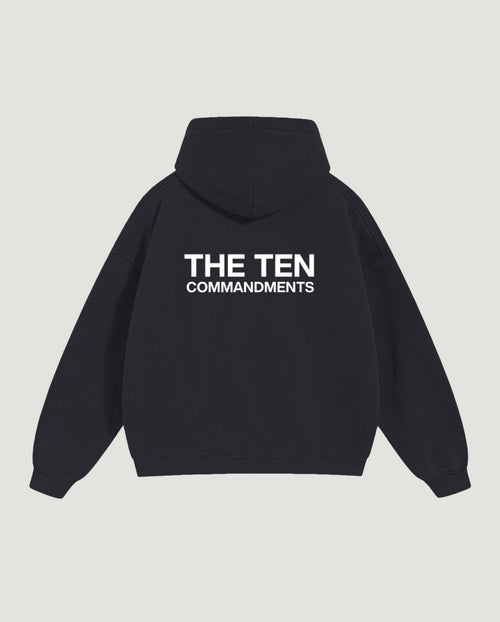 The Ten Hoodie
 The Ten Sweatshirt
 The Ten T-Shirt
 Falling Man Hoodie
Read it. Live it. Wear it.
Shop The Ten collection